
Alcohol Tariffs 2026 and Smart Import Pricing Strategies
Navigate Alcohol Tariffs 2026 with hedging, pricing, and domestic shifts to protect margins and boost retail profits.
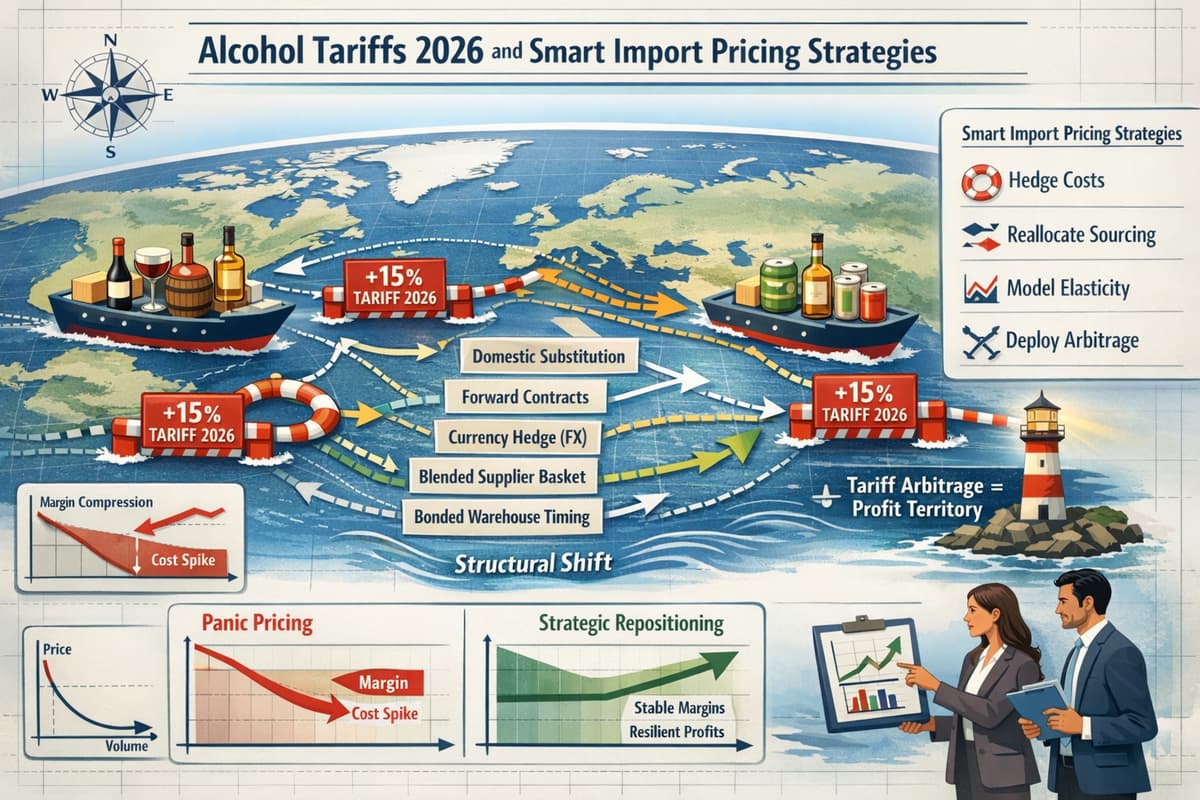
Last quarter, I sat with a mid-sized wine retailer staring at a spreadsheet like it had personally offended him.
His margins on imported Italian reds had shrunk by 11%. Freight was up. Currency was wobbling. And now alcohol tariffs 2026 were rolling in with a baseline 15% hit.
He sighed and said, “So we just raise prices and hope customers don’t notice, yeah?”
That’s the moment most retailers get wrong.
Tariffs aren’t a storm. They’re a tide. And tides don’t destroy everything. They redistribute.
Alcohol tariffs 2026 and evolving US alcohol import tariffs aren’t random chaos. They shift leverage. They reward domestic producers. They expose over-reliance on certain regions. And for retailers who deploy real hedging strategies alcohol tariffs retailers should already be using, they create arbitrage.
Not survival.
Advantage.
Alcohol Tariffs 2026 Are a Structural Shift, Not a Temporary Shock
The biggest mistake I see? Treating 2026 tariff changes wine spirits as a three-month disruption.
But look closer. A 15% baseline tariff isn’t a blip. It reshapes cost architecture from vineyard to shelf.
Under current US alcohol import tariffs, European wine, certain spirits, and specialty categories face layered costs that stack on top of freight volatility and FX risk. That’s not noise. That’s structural redistribution.
When governments impose tariffs, they are not just taxing imports. They are quietly subsidizing domestic substitution.
So when shelf space starts shifting toward California blends, Kentucky bourbon, or emerging domestic RTDs, that’s not patriotism.
That’s margin gravity.
Retailers who understand this stop reacting emotionally and start reallocating strategically.
Hedging Strategies Alcohol Tariffs Retailers Should Already Be Using
Let’s talk practically. Because “hedging” sounds intimidating, but it’s really about building shock absorbers into your pricing model.
Real hedging strategies alcohol tariffs retailers can deploy include:
- Forward contracts with import partners to lock pricing before additional tariff escalations.
- Currency hedges on euro- or peso-denominated purchase agreements.
- Volume-based pricing floors negotiated ahead of additional tariff rounds.
- Blended supplier baskets mixing tariff-heavy SKUs with insulated domestic equivalents.
Think of it like building a diversified investment portfolio. If your entire SKU mix depends on regions exposed to US alcohol import tariffs, you’re not retailing.
You’re gambling.
One regional distributor I worked with restructured 40% of their European-heavy wine portfolio into blended domestic substitutes before alcohol tariffs 2026 kicked in. They locked six-month pricing with core suppliers and shifted long-tail imports to special order only.
Result?
Their margin compression was 3.2%, while competitors ate 9-14%.
That’s not luck.
That’s planning.
Tariff Arbitrage: Turning Import Pricing Strategies Into Profit Engineering
Here’s where things get interesting.
Most retailers use blunt-force import pricing strategies. When tariffs hit, they increase shelf price proportionally.
Customers feel it. Velocity drops. Everyone complains.
But tariff arbitrage works differently.
Instead of passing through full increases, you:
- Offset high-tariff SKUs with higher-margin domestic alternatives.
- Reprice strategically based on elasticity, not emotion.
- Promote domestic categories gaining consumer curiosity.
- Create bundles mixing imported prestige with domestic profitability.
One retailer bundled a tariff-hit French rosé with a premium Texas rosé under a “Global Meets Local” promotion. The imported bottle kept its prestige image. The domestic bottle carried margin.
Blended gross margin improved 7%.
Customers felt like explorers.
That’s arbitrage.
Alcohol tariffs 2026 don’t remove demand. They distort relative pricing. If you watch those distortions carefully, you’ll spot pockets where value perception and cost reality don’t line up.
That gap?
That’s profit territory.
Elasticity Modeling: The Unsexy Superpower
I know. “Elasticity modeling” sounds like something an economist mutters into a calculator.
But in plain English? It means understanding which customers will tolerate price increases and which will bolt.
Under 2026 tariff changes wine spirits markets won’t react evenly.
Ultra-premium tequila buyers? Less price sensitive.
Entry-level imported prosecco crowd? Very sensitive.
Retailers using hedging strategies alcohol tariffs retailers rely on aren’t just hedging supply costs. They’re mapping price response curves.
Here’s a simple framework:
- Identify top 30 SKUs impacted by US alcohol import tariffs.
- Review 12-month sales velocity data.
- Test incremental 3%-5% price adjustments quarterly.
- Monitor volume decline relative to margin gain.
You’re looking for the sweet spot where dollars per case rise faster than unit decline.
It’s not flashy.
But it’s powerful.
And when competitors panic-price across the board, you’ll look calm. Almost annoyingly calm.
Domestic Substitution Is Not Selling Out - It’s Strategic Rebalancing
There’s this emotional attachment to imported portfolios. I get it. A Burgundy allocation feels romantic. A small-batch Spanish vermouth tells a story.
But romance doesn’t protect margin.
Alcohol tariffs 2026 are accelerating domestic innovation. Especially in the RTD segment, where U.S. producers are moving at lightning speed. If you haven’t reviewed performance trends, I strongly recommend reading the comprehensive RTD market overview here: https://www.ohbev.com/blog/rtd-market-2024-comprehensive-overview
Domestic RTDs are scaling quality while avoiding import duties altogether.
That’s not a trend. That’s structural arbitrage potential.
You’re not abandoning imports.
You’re balancing exposure.
Retailers who integrate domestic substitutes as strategic complements, not desperate replacements, stabilize cash flow during tariff transitions.
One chain I advised reframed shelf tags to emphasize “Crafted in the USA” beside tariff-impacted imports. Customers responded positively. Margin stabilized. Inventory risk dropped.
Sometimes patriotism sells.
Sometimes margins dictate.
Often, both win.
Building Long-Term Contracts Before the Next Tariff Wave
If you take one lesson from all this, let it be this:
Hedging strategies alcohol tariffs retailers implement must be forward-looking.
Waiting until US alcohol import tariffs increase again is like buying an umbrella after the rain starts.
Strong operators right now are:
- Negotiating multi-year agreements with pricing caps.
- Shifting some imports to bonded warehouses for duty deferral timing advantages.
- Reassessing distributor exclusivity clauses to expand sourcing optionality.
- Modeling scenario plans for additional 2026 tariff changes wine spirits categories may face.
This isn’t fear-based planning.
It’s structural resilience.
Retailers who treat alcohol tariffs 2026 as an ongoing cost layer rather than a temporary penalty make calmer, more profitable decisions.
And calm retailers don’t slash margins out of panic.
They reposition.
Authority Comes From Strategy, Not Complaints
I’ve worked with enough operators to know this:
Complaining about tariffs doesn’t improve EBITDA.
Designing intelligent import pricing strategies does.
Alcohol tariffs 2026, US alcohol import tariffs, and tariff shifts across wine, spirits, and beer categories are redistributing advantage right now.
You can raise prices blindly and hope customers accept it.
Or you can:
- Hedge costs.
- Reallocate sourcing.
- Model elasticity.
- Deploy tariff arbitrage intentionally.
The tide doesn’t care about your frustration.
But it rewards those who study its direction.
If you build hedging strategies alcohol tariffs retailers actually execute - rather than discuss in theory - you create insulation competitors won’t see until it’s too late.
Margins stabilize. Inventory tightens. Cash flow breathes.
And suddenly, while others feel squeezed by 2026 tariff changes wine spirits disruptions, you feel strangely… positioned.
Strategic.
Unbothered.
Because you understood something simple:
Tariffs are not random disasters.
They are directional forces.
And direction can be studied. Mapped. Leveraged.
In the tariff tide, don’t drown - arbitrage your way to the surface where domestic deals and hedging contracts turn chaos into your competitive edge.